
Perimenopause: A TCM Perspective on a Woman’s Transition
Updated: Sep 1

The word perimenopause is relatively modern. However, the experience is ancient.
Traditional Chinese Medicine (TCM) did not describe perimenopause as a distinct medical condition in the way we understand it today. Instead, classical Chinese medical texts described the physiological changes women experience throughout their lives, including the gradual transition towards the end of menstruation.
Development → Menstruation → Maturity → Vitality → Change → Transition → Menopause
In the Yellow Emperor’s Inner Classic—the foundational TCM text—these changes are described through seven-year stages of a woman’s life. At around seven years of age, a girl’s Kidney Qi begins to flourish, and her body develops. By around 14, Tian Gui, sometimes translated as “Heavenly Water,” arrives, marking the onset of menstruation. Around the age of 21, the body continues to mature, and by around 28, a woman is considered to be at the height of her physical vitality.
From around 35, she enters a period of gradual change, and by around 49, the Tian Gui is said to become exhausted, and menstruation comes to an end, marking the transition into a new stage of a woman’s life.
7 → 14 → 21 → 28 → 35 → 42 → 49
Interestingly, modern hormonal research also points to changes around the age of 35. In Balance Your Hormones, Balance Your Life, Dr Claudia Welch suggests that because progesterone begins to decline around this age, perimenopause begins around that time and progresses as our sex hormones (especially progesterone and estrogen) change.
Of course, women’s lives today don’t always follow these ancient seven-year cycles so precisely. Girls often experience their first menstruation at a younger age, while women may remain reproductively active into their forties and beyond. Our lifestyles, nutrition, stress levels, environment and overall health are also very different today. At the same time, progress in medicine and healthcare has profoundly changed women’s lives, particularly through contraception, fertility treatments and hormone replacement therapy (HRT).
So where does perimenopause fit into this ancient framework?
TCM did not describe perimenopause as a distinct condition, but it has long understood the transition towards the end of menstruation as a natural stage of a woman’s life.
What does TCM say about this transition, and which concepts can help us understand what a woman may experience during this stage of life?
The Natural Decline of Jing
In TCM, Kidney Jing—sometimes described as our “Life Essence”—is understood as something we inherit from our parents. It is closely associated with our growth, development, reproductive capacity and the natural process of ageing. The Yellow Emperor’s Inner Classic describes the gradual flourishing and eventual decline of Jing as part of the natural rhythm of life.
From this perspective, the transition towards menopause is not viewed simply as something going wrong with the body. It is part of a natural stage of life in which our reproductive capacity gradually changes.
Yin and Yang in Balance
Another important concept in understanding perimenopause through the TCM lens is the dynamic relationship between Yin and Yang. Very simply, Yin is associated with qualities such as cooling, nourishment, moisture and rest, while Yang is associated with warmth, activity, movement and transformation. They depend on and support each other, constantly adjusting to maintain balance within the body.
During perimenopause, this balance can become more challenging as the body moves through significant hormonal changes. From a TCM perspective, a relative decrease in Yin may mean that Yang becomes more prominent, which can contribute to experiences such as hot flushes, night sweats, restlessness and disturbed sleep. However, this is not the same for every woman, and different patterns of imbalance can lead to very different symptoms.
Dr Claudia Welch connects TCM with our modern understanding of hormones, describing estrogen as more Yin-like and progesterone as more Yang-like.
The Individual Pattern
In TCM, there is no single pattern that defines perimenopause. Each woman comes to this transition with her own constitution, life history and state of health. Factors such as stress, nutrition, sleep, emotional balance and overall health can all influence how the body responds to change.
From a TCM perspective, these differences are important. Rather than treating perimenopause in the same way for every woman, a TCM practitioner looks for the individual pattern behind your symptoms and tailors the approach to you. This is why a TCM consultation is not simply about asking, “What symptoms are you experiencing?” It is about looking at the bigger picture. Your menstrual cycle, sleep, digestion, energy, emotions, temperature, stress levels and other signs can all provide clues about how your body is adapting to this transition.
How can TCM support you through perimenopause?
If you’re considering seeing a TCM practitioner, your treatment may include acupuncture, dietary and lifestyle advice, and other recommendations to support you through this transition.

What can I do to support myself?
Perimenopause is a time of change. From a TCM perspective, supporting your body means helping it adapt to this transition as smoothly as possible.
Nourish your body.
Food is an important part of TCM. Regular, nourishing meals can support your energy and digestion, while overly restrictive diets or skipping meals may place additional stress on the body. There is no single “perimenopause diet” in TCM; dietary recommendations are best adapted to the individual.
Prioritise rest and sleep.
Your body needs time to rest, restore and replenish, helping to preserve and support your Kidney Jing. Creating a regular sleep routine, allowing yourself enough time to rest, and paying attention to what may be disturbing your sleep can be particularly valuable during this stage of life.
Manage stress.
Stress can have a significant impact on a woman’s hormonal balance, making it especially important to find ways to slow down and restore during perimenopause. Breathe, move, spend time outdoors, connect with others or simply create moments of quiet to help your body and mind find more balance.
Keep moving.
Movement helps promote the flow of Qi, strengthen the body and support balance. The key is to find movement that supports you rather than continually exhausts you. Walking, Qigong, Tai Chi, yoga, swimming, strength training and other forms of movement can all be beneficial, depending on your body and your circumstances.
Listen to your body.
Perhaps the most important principle is to pay attention. Changes in your cycle, sleep, energy, digestion, mood and temperature are not something you simply have to accept. They can be invitations to pause and ask what your body may need at this particular stage of life.
For some women, lifestyle changes may be enough. If you feel you need more support, working with a TCM practitioner may be another option to consider.
Conclusion
The ancient Chinese physicians understood that ageing is not simply an ending, but a natural transformation of the body and its energies. Perhaps perimenopause can be viewed in the same way—not as something to fear or fight, but as an invitation to listen more closely, care for ourselves differently and enter the next stage of life with greater awareness.
As the Yellow Emperor’s Inner Classic reminds us, the journey of a woman’s life is one of continual change. And perhaps the real art lies not in resisting that change, but in learning how to move through it with balance.
My Favourite Books
If you’d like to explore women’s health and hormones from a holistic perspective, here are a few of my favourite books for further reading:
Balance Your Hormones, Balance Your Life — Dr Claudia Welch
Reflections of the Moon on Water — Xiaolan Zhao
The Hormone Repair Manual — Lara Briden
#Perimenopause #TCM #TraditionalChineseMedicine #WomensHealth #TCMforWomen #PerimenopauseSupport #HormonalHealth #WomensWellbeing #Acupuncture #HolisticHealth #HealthyAging #MindBodyHealth
_______________________________________________________________________________________________________________________
*Sources:
Xiaolan Zhao: Traditional Chinese Medicine for Women – Reflections of the Moon on Water (2006)
Claudia Welch: Balance Your Hormones, Balance Your Life (2021)
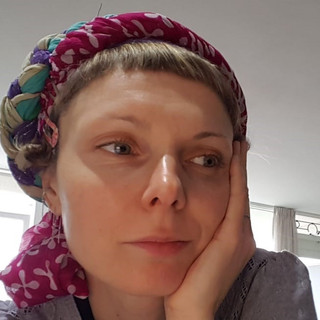
**The featured photographs of me are by my friend Maria
*** Disclaimer: This article is for educational purposes only and is not intended to diagnose, treat or replace medical advice. If you are experiencing new, persistent or concerning symptoms, please consult a qualified healthcare professional. TCM should be considered as a complementary approach to your overall healthcare.


Comments